
How to Get Rid of Smelly Feet for Good: A Simple Routine That Works
If you want to know how to get rid of smelly feet, start with the cause: foot odor happens when bacteria on your skin break down sweat. The fix is a simple daily routine that keeps your feet clean and, above all, dry. Wash every day, dry thoroughly (including between your toes), rotate your shoes, wear moisture-wicking socks, and add powder or antiperspirant if you sweat a lot.
Below is the full routine, step by step, plus the home soaks reputable health sources recommend and the signs that mean it's time to see a professional.
Key takeaways
- Smelly feet (the medical term is bromodosis) come from sweat and bacteria, so the goal is less moisture and less bacteria.
- Wash your feet at least once a day and dry them completely, especially between the toes, where moisture tends to linger.
- Don't wear the same shoes two days in a row; let them dry out, and choose breathable shoes and moisture-wicking socks.
- If odor doesn't improve with good hygiene, or it comes with pain, redness or broken skin, see a doctor or podiatrist.
Why do feet smell in the first place?
Feet are working hard inside socks and shoes all day, and they sweat. On its own, sweat doesn't smell much. The odor comes from what happens next. According to Cleveland Clinic, feet develop an odor when bacteria feed on the sweat from your sweat glands, and the technical name for the problem is bromodosis. The same article makes a reassuring point: your feet will always have some smell, but everyday habits can make it much less noticeable.
The NHS names the main causes as a build-up of sweat and bacteria, along with fungal infections like athlete's foot. It also lists things that can make you sweat more: hot weather, exercise, standing for long periods, being overweight, hormonal changes, some medicines, and a condition called hyperhidrosis, which causes excessive sweating.
So every step below either removes sweat and bacteria or keeps moisture from building up again. If you'd like a deeper look at the triggers, including why some people are more prone than others, read our guide to what causes smelly feet.
How to get rid of smelly feet: a simple daily routine
Step 1: Wash your feet properly, every day

The NHS recommends washing your feet at least once a day, using an antibacterial soap if you can. "Properly" means more than letting shower water run over your feet. Use soap and your hands or a washcloth to clean the tops, the soles, around the heels and between each toe.
A couple of extras help too. The NHS suggests removing hard skin with a foot file and keeping toenails short and clean. Cleveland Clinic adds that bacteria love dead skin, so exfoliating with a scrub or pumice stone at least once a week takes away some of their food supply. It also recommends cleaning under your toenails regularly and keeping them at a sensible length, since nails that are too long trap debris and nails cut too short can become ingrown.
Step 2: Dry thoroughly, including between your toes
This is the step most people rush, and it's often the missing piece. Cleveland Clinic puts it simply: moisture enables odor, so dry your feet thoroughly after bathing, swimming or soaking. The NHS specifically tells you to dry between your toes.
The spaces between the toes are warm, tight and easy to miss with a regular towel. MedlinePlus, from the U.S. National Library of Medicine, advises keeping your feet clean and dry, "especially between your toes," and drying the area carefully and completely after washing. Moisture between the toes can create conditions where fungus and bacteria thrive, which is why this small gap matters so much.
A few ways to dry between your toes well:
- Take your time. Dry each foot on its own, then go back to each toe gap.
- Use a thin, soft edge of a towel and gently press it into each space rather than rubbing hard.
- Let your feet air-dry for a minute or two before putting on socks.
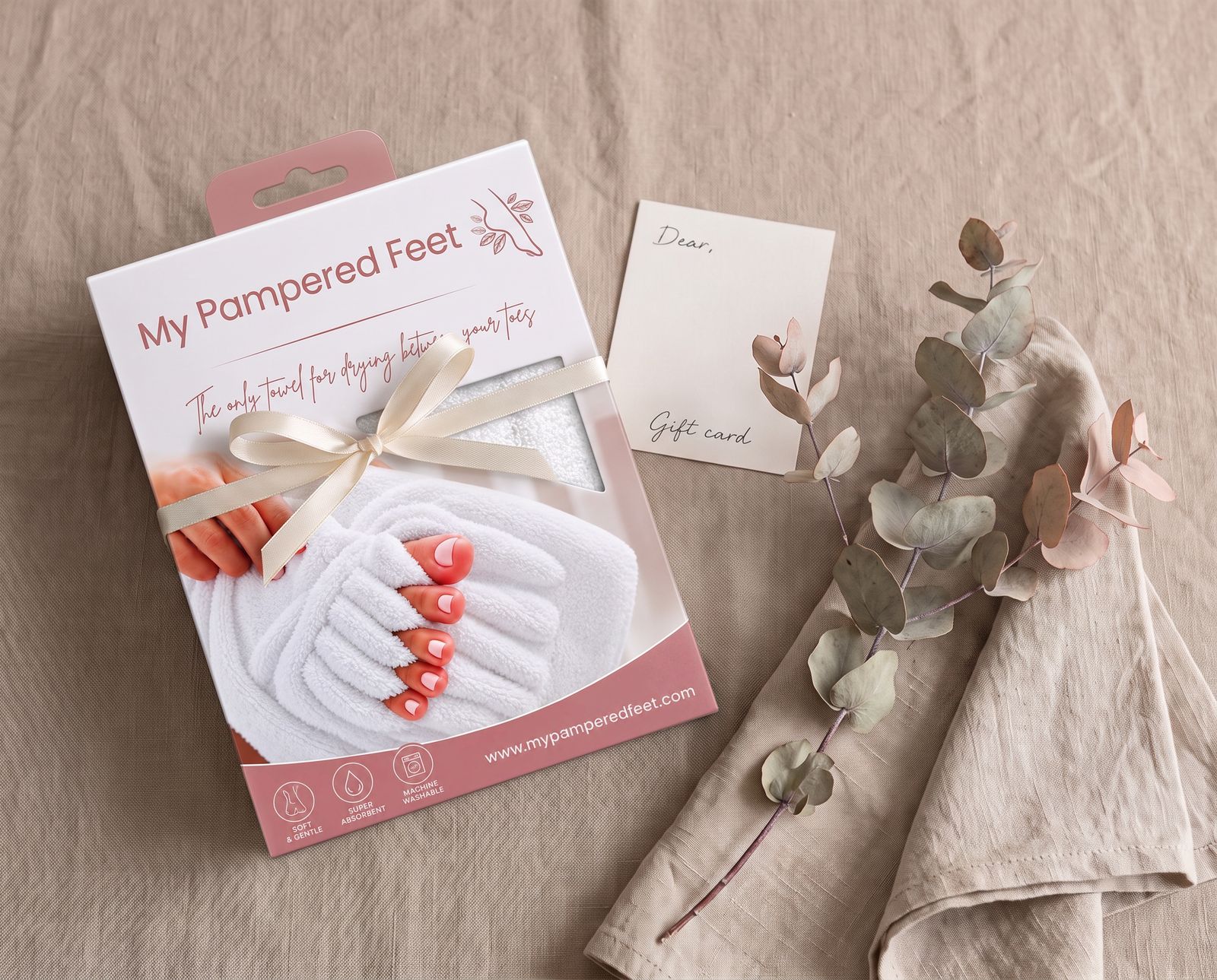
- Use a towel made for the job, like our Toe Dry Towel, which has soft strips that slide between the toes so you can dry each gap without rubbing.
If you notice your feet still smell even though you shower daily, damp toe spaces are one of the first things to check. We cover that exact situation in why your feet can smell after a shower, and there's a whole article on the habit itself: don't forget to dry between your toes.
Step 3: Choose moisture-wicking socks and change them often
Socks sit right against your skin all day, so they make a big difference. The American Academy of Dermatology suggests socks with moisture-wicking properties, such as bamboo or polyester/nylon blends labeled as moisture-wicking. The NHS recommends breathable or natural fabrics, and MedlinePlus suggests clean cotton socks, changed as often as needed to keep your feet dry.
The common thread: wear clean socks every day and change them if your feet get damp. The NHS notes that people with hyperhidrosis may need to change socks twice a day.
Step 4: Rotate your shoes and let them dry out

Shoes absorb sweat, and a pair that never fully dries becomes a home for odor. The NHS advises against wearing the same shoes two days in a row and says to let shoes dry out before wearing them again. The AAD gives the same advice and also suggests slipping off your shoes when you can.
When you buy shoes, the AAD and MedlinePlus both point to natural, breathable materials like leather. MedlinePlus also suggests avoiding plastic-lined shoes, and the NHS says to avoid tight shoes. For shoes that already smell, Cleveland Clinic suggests spraying the insoles with a disinfectant that contains ethanol, letting them dry for 24 hours, and then putting them back in.
Step 5: Use foot powder or antiperspirant if you sweat a lot
If your feet sweat heavily, drying products can help. The NHS lists foot powder and antiperspirant as self-care options. Cleveland Clinic mentions cornstarch, foot antiperspirant or even regular underarm antiperspirant to help control moisture, and the AAD recommends shoe insoles and foot powder that absorb wetness.
Always apply these to feet that are clean and completely dry. A pharmacist can also point you toward options like foot deodorants, medicated insoles or antimicrobial socks, all of which the NHS mentions as things a pharmacist may suggest.
Step 6: Give your feet some air
Less time in closed shoes means less trapped sweat. Cleveland Clinic suggests going barefoot at home to reduce sock and shoe time, with an important exception: skip this if you have diabetes. The CDC advises people with diabetes to wear shoes and socks indoors and out to protect their feet from injury. For more on building these habits into your day, see our daily foot hygiene routine.
Do foot soaks help with smelly feet?

Soaks are one of the most searched smelly feet remedies, and two of them are backed by a reputable source. Cleveland Clinic describes both:
| Soak | How to do it | Why it may help |
|---|---|---|
| Epsom salt | Dissolve half a cup in warm water and soak for 10–20 minutes. | Pulls moisture out of the skin, making it less inviting to bacteria. |
| Vinegar | Mix two parts water with one part white or apple cider vinegar; soak for 15–20 minutes, once a week. | Makes the skin less hospitable to bacteria. |
Two cautions. First, Cleveland Clinic says to skip the vinegar soak if you have open sores or cuts. Second, if you have diabetes, the CDC recommends washing your feet in warm water without soaking them, so talk to your doctor before trying any foot soak. And whatever you soak in, dry your feet completely afterward, including between the toes.
How to prevent smelly feet from coming back
The same routine that helps you get rid of smelly feet also keeps the odor from coming back. Here's a quick checklist:
- Wash with soap every day, including between the toes.
- Dry completely, toe gap by toe gap.
- Put on clean, moisture-wicking socks, and change them if they get damp.
- Alternate shoes so each pair gets time to dry.
- Use powder or antiperspirant on days you know you'll sweat.
- Exfoliate and trim nails about once a week.
- Wear sandals or flip-flops in public showers and pool areas, as MedlinePlus recommends, to reduce exposure to athlete's foot fungus.
What if you have diabetes?
If you have diabetes, foot care goes beyond odor. The CDC recommends checking your feet every day for cuts, redness, swelling, sores, blisters, corns, calluses or other changes to the skin or nails. It also advises washing your feet every day in warm (not hot) water without soaking them, drying them completely and not putting lotion between your toes, because that could lead to infection.
Check your feet daily and follow your doctor's or podiatrist's advice. Cleveland Clinic also notes that medical conditions, including diabetes, can make foot odor stronger, so a new or worsening smell is worth mentioning at your next appointment. We've put together a practical guide to diabetic foot care products if you're building a kit for yourself or someone you care for.
When should you see a doctor about smelly feet?
Most foot odor responds to good hygiene. But the NHS recommends seeing a doctor if self-care isn't helping or if smelly feet are affecting your daily life, since there may be an underlying cause that needs treatment. Cleveland Clinic adds that infections, diabetes and kidney disease can intensify foot odor, and that some medications can be a factor too.
Make an appointment with your doctor or a podiatrist if you notice:
- Odor that doesn't improve after a few weeks of a consistent routine.
- Very heavy sweating that interferes with daily life.
- Itching, peeling or cracked skin between the toes, which can be signs of athlete's foot.
- Redness, swelling, pain, blisters, sores or thickened, discolored nails.
- Any foot changes at all if you have diabetes. The CDC says to contact your doctor right away for tingling, burning or pain, changes in color or temperature, thickened yellow nails, or any blisters, sores or ulcers.
A small tool for the step most people skip
Of all the steps above, drying between the toes is the one that's easiest to rush, especially if bending down is hard or your toes sit close together. That's why founder Yen created the Toe Dry Towel. She couldn't find a towel that actually reached between the toes, so she designed one. You can read more in our story.
The Toe Dry Towel has 8 soft, absorbent strips, four for each foot, one for every gap between the toes. After your shower, slide the strips between your toes, let them absorb, then slide them out. No rubbing. It's machine washable, fits in a gym or travel bag, and keeps foot care separate from the towels you use on your face and body. See how it works in a few seconds.
It isn't a treatment for anything. It's simply a hygiene tool that helps you dry between your toes, so that step becomes part of good everyday foot care instead of an afterthought. It also makes a thoughtful addition to self-care gifts for women who love a good at-home routine. A single towel is $29.99, and 2-Packs and 3-Packs are available (the 3-Pack ships free in the U.S.).
FAQ
What is the fastest way to get rid of smelly feet?
Wash your feet with soap, dry them completely (including between the toes), and put on clean socks and a different pair of shoes than yesterday. Doing this daily keeps the odor from returning.
What is the best treatment for smelly feet?
For most people, the best treatment for smelly feet is consistent hygiene: daily washing, thorough drying, moisture-wicking socks, rotating shoes, and foot powder or antiperspirant if you sweat a lot. If that doesn't help, the NHS suggests asking a pharmacist or seeing a doctor.
Does soaking feet in vinegar or Epsom salt help?
Cleveland Clinic describes both as home remedies: half a cup of Epsom salt in warm water for 10–20 minutes, or a 2:1 water-to-vinegar soak for 15–20 minutes once a week. Skip vinegar if you have cuts or sores, and if you have diabetes, ask your doctor first, since the CDC advises against soaking.
Why do my feet still smell after I shower?
Often it's leftover moisture, especially between the toes, or putting clean feet back into damp shoes or worn socks. Dry every toe gap carefully and let your shoes dry out between wearings.
When should I worry about smelly feet?
See a doctor or podiatrist if good hygiene doesn't help, if odor affects your daily life, or if you notice pain, redness, swelling, broken skin or nail changes. If you have diabetes, check your feet daily and report any changes promptly.
This article is for general information and isn't medical advice. If you have diabetes, a foot condition or signs of infection, talk to your doctor or podiatrist.