
Diabetic Foot Care Products: A Daily Routine and Home Checklist
The most useful diabetic foot care products are simple ones: a mirror for daily foot checks, a bath thermometer, a gentle soap, a soft towel for drying between your toes, a good moisturizer, nail clippers and an emery board, and well-fitting socks and shoes. None of them replace your care team. They just make it easier to follow the daily routine that the CDC, the American Diabetes Association and podiatrists recommend.
Below, we walk through that daily routine step by step, based on guidance from trusted health organizations, then share a checklist of product types worth keeping at home.
Key takeaways
- Check your feet every day and follow your doctor's or podiatrist's advice. Use a mirror if you can't see the bottoms of your feet.
- Wash in warm, not hot, water. The NIDDK suggests testing it with a thermometer (90° to 95°F) or your elbow.
- Dry gently and completely, including between the toes, and keep lotion out of those spaces.
- Never go barefoot, even at home, and see a foot doctor at least once a year.
Why does foot care matter so much with diabetes?
According to the CDC's "Diabetes and Your Feet", about half of all people with diabetes have some kind of nerve damage. When nerves are affected, you may not feel a cut, blister or burn, which is why daily checks matter so much.
The American Podiatric Medical Association (APMA) puts it plainly: even a simple callus can progress quickly into a serious wound. The APMA encourages people with diabetes to examine their feet daily, manage their blood sugar, and see a podiatrist at least once a year.
Good daily habits are your part of the plan. Here's what that looks like.
Diabetic foot care at home: the daily routine
1. Inspect your feet every day
The CDC recommends checking your feet every day for cuts, redness, swelling, sores, blisters, corns, calluses or any other change. The National Institute of Diabetes and Digestive and Kidney Diseases (NIDDK) adds ingrown toenails, warm spots and athlete's foot to the list, and reminds you to look between your toes. The APMA also suggests watching for changes in color, temperature or hair growth.
If bending over is hard, the NIDDK suggests using a mirror, and the CDC suggests asking a family member to help.
2. Wash in warm, not hot, water

Wash your feet every day with soap in warm (not hot) water. Because nerve damage can make it hard to judge temperature, the NIDDK recommends testing the water with a thermometer (90° to 95°F is safe) or your elbow before your feet go in.
Both the CDC and NIDDK advise against soaking your feet. The NIDDK explains that soaking can leave your skin too dry.
3. Dry gently and completely, including between the toes
The American Diabetes Association recommends washing with warm soapy water and making sure to dry thoroughly between the toes. The CDC says to dry your feet completely. Pat gently rather than rubbing, and give each space between your toes attention.
After drying, the NIDDK suggests putting talcum powder or cornstarch between your toes. Ask your doctor or podiatrist whether that's right for you.
4. Moisturize the tops and bottoms, but not between the toes
The NIDDK suggests rubbing a thin coat of lotion, cream or petroleum jelly on the tops and bottoms of your feet. The CDC, the NIDDK, the ADA and Cleveland Clinic all agree on one important rule: don't put lotion or cream between your toes. The ADA's foot care tips note that moisturizing between the toes can lead to infections, and the CDC gives the same warning.
5. Never go barefoot
The CDC says to never go barefoot and to always wear shoes and socks or slippers, even inside. The NIDDK adds that you shouldn't walk around in just socks. Before you put shoes on, check inside them for pebbles, sharp objects or rough linings.
6. Choose socks and shoes with care

- Socks: The ADA suggests socks that are light-colored, well-fitting, moisture-wicking, seamless and padded if needed. The NIDDK recommends clean, lightly padded socks with no seams and advises against tight socks.
- Shoes: Wear shoes that fit well. The CDC suggests trying shoes on at the end of the day, when your feet are largest, and breaking new shoes in slowly. Always wear socks with shoes.
- Special footwear: The ADA suggests asking your doctor whether therapeutic shoes or inserts are right for you.
7. Care for your nails carefully
Trim toenails straight across and gently smooth sharp edges with an emery board or non-sharp nail file. The NIDDK advises not cutting into the corners. If you can't see, feel or reach your feet, or if your nails are thick, yellowed or ingrown, have a podiatrist trim them.
8. Leave corns and calluses to the professionals
The CDC advises against removing corns or calluses yourself or using over-the-counter removal products. The NIDDK specifically warns against cutting them or using medicated pads or liquid removers. Talk to your foot doctor about the best approach; the NIDDK notes that some people may be advised to use a pumice stone gently after bathing.
9. Protect your feet from heat
The NIDDK recommends keeping your feet away from heaters and open fires, wearing shoes at the beach and on hot pavement, putting sunscreen on the tops of your feet, and not putting a hot water bottle or heating pad on your feet. The ADA also says not to use heating pads on your feet.
10. See your podiatrist and know the red flags

The CDC recommends getting your feet checked at every visit with your primary care provider and seeing a foot doctor every year, or more often if you have nerve damage. The APMA stresses contacting your podiatrist right away if you notice any changes.
Get care promptly for cuts or blisters that don't heal, skin that is red, warm or painful, numbness, or any sign of infection. When in doubt, call your doctor.
Diabetic foot care products checklist: what to keep at home
This is a list of product types that support the routine above. Ask your doctor or podiatrist which ones fit your situation.
| Product type | What it helps with |
|---|---|
| Hand mirror (or long-handled mirror) | Seeing the bottoms of your feet during daily checks |
| Bath or water thermometer | Checking water is in the safe 90° to 95°F range the NIDDK suggests |
| Gentle soap or cleanser | Daily washing |
| Soft towel for feet, including one that reaches between the toes | Drying gently and completely |
| Lotion, cream or petroleum jelly | Moisturizing the tops and bottoms of your feet (never between the toes) |
| Talcum powder or cornstarch | Between the toes after drying, if your care team agrees |
| Toenail clippers and an emery board | Trimming straight across and smoothing edges |
| Seamless, lightly padded, moisture-wicking socks | Protecting skin and keeping feet dry |
| Well-fitting shoes and house slippers | Never going barefoot, indoors or out |
| Sunscreen | The tops of your feet when they're exposed |
Just as important is what to leave off the list: medicated corn pads, liquid corn and callus removers, and heating pads or hot water bottles for your feet, all of which the NIDDK advises against.
Patient education for diabetic foot care: tips for patients and caregivers
These diabetic foot care tips can help the routine stick, whether you're caring for your own feet or helping a loved one.
- Make it part of a set time. A foot check at bedtime or after a shower is easier to remember.
- Do the check together. The CDC suggests asking a family member to help if you can't see your feet well.
- Keep the kit in one place. A basket with the mirror, thermometer, towel, lotion and nail tools saves steps.
- Write down changes. A quick note or phone photo makes it easier to show your doctor what you noticed.
- Keep appointments. Bring up foot care at every visit, as the CDC recommends.
For everyday freshness tips that apply to everyone, see our daily foot hygiene routine and our guide on how to get rid of smelly feet.
A gentle way to dry between your toes
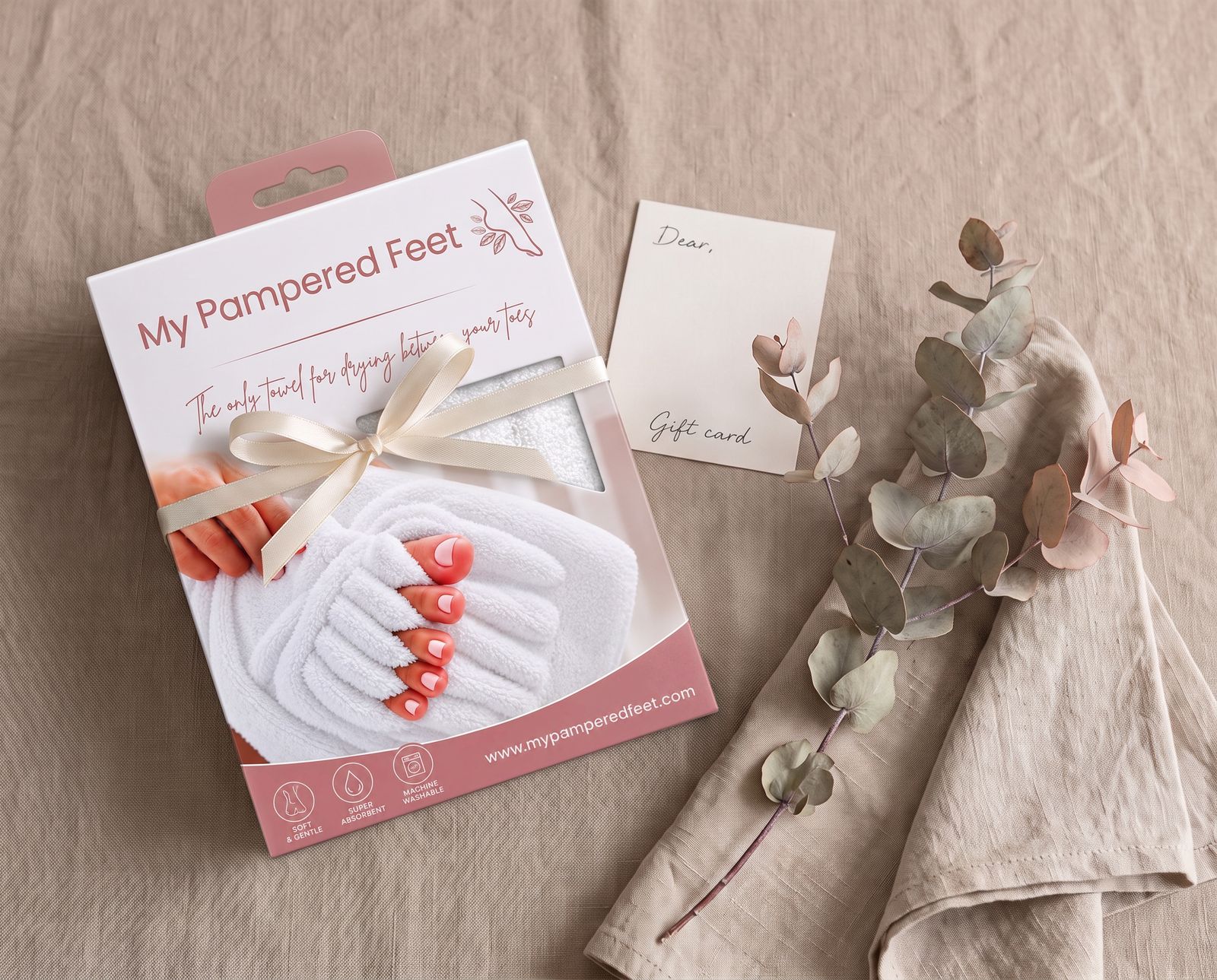
Drying thoroughly between the toes is a step the ADA and Cleveland Clinic both call out, and it's hard to do well with a regular towel. The Toe Dry Towel by My Pampered Feet is a hygiene product with eight soft, absorbent strips, four per foot, one for each space between your toes. After washing, you slide the strips between your toes, let them absorb, and slide them out. No rubbing.
It's machine washable and gives your feet their own dedicated towel. To be clear, it's not a medical device and doesn't treat or prevent any condition. It simply helps you dry between your toes as part of your daily routine. If you have numbness, open skin or any foot concern, ask your podiatrist before using any new foot-care product. You can see how it works here.
FAQ
What are the most important diabetic foot care products?
A mirror for daily checks, a thermometer for bath water, a gentle soap, a soft towel for drying between your toes, a moisturizer for the tops and bottoms of your feet, nail clippers and an emery board, and seamless socks with well-fitting shoes. Ask your care team about anything more specialized, like therapeutic shoes or inserts.
What water temperature is safe for washing feet with diabetes?
Warm, not hot. The NIDDK says 90° to 95°F is safe and suggests checking with a thermometer or your elbow, since nerve damage can make it hard to feel heat with your feet.
Can I put lotion between my toes if I have diabetes?
No. The CDC, NIDDK and American Diabetes Association all advise keeping lotion and cream out from between your toes because the extra moisture could lead to infection. Moisturize the tops and bottoms instead.
Should people with diabetes soak their feet?
The CDC and NIDDK both advise against soaking. The NIDDK notes that soaking can make your skin too dry.
How often should I see a podiatrist?
The CDC recommends a foot doctor visit every year, or more often if you have nerve damage, plus a foot check at every primary care visit. Check your feet daily and follow your doctor's or podiatrist's advice, and call right away if you notice a change.
This article is for general information and isn't medical advice. If you have diabetes, a foot condition or signs of infection, talk to your doctor or podiatrist.