
Daily Foot Hygiene Routine: 5 Easy Steps and the Products to Keep
A good foot hygiene routine takes about five minutes a day: wash your feet with a gentle cleanser, dry them completely (especially between the toes), take a quick look for changes, moisturize the tops and bottoms, and put on clean socks and shoes that fit. The right foot hygiene products make it easier, but the habit matters more than any single item.
Below is the simple daily routine we recommend, a short list of what to keep in your foot-care kit, and a few weekly extras to keep your feet feeling fresh and comfortable.
Key takeaways
- Wash your feet every day and dry them completely, including the spaces between your toes.
- Moisturize the tops and bottoms of your feet, but keep lotion out from between the toes.
- Change your socks at least once a day and give your shoes time to dry out between wears.
- Check your feet regularly for cuts, sores, swelling or dryness, and see a professional if something doesn't look right.
Why does good foot hygiene matter?
Your feet spend most of the day closed up in socks and shoes, which is a warm, humid place. According to the CDC's guide to foot hygiene, good foot care helps you avoid problems like athlete's foot and other fungal infections. The same basics also help with everyday comfort and freshness. If odor is your main concern, our guide on how to get rid of smelly feet goes deeper.
The good news: foot hygiene isn't complicated. It's a handful of small steps you can fit into your shower routine.
What is a simple daily foot hygiene routine?
Here's a five-minute routine you can do every day, usually right after your shower or bath.
Step 1: Wash your feet (1 minute)
The CDC's advice is simple: wash your feet every day and dry them completely. Don't just let soapy water run over them in the shower. Use your hands or a washcloth to clean the soles, the heels, the tops of your feet and the spaces between your toes.
Choose a gentle product. Cleveland Clinic suggests a gentle cleanser that's dye-free and fragrance-free, and the American Academy of Dermatology recommends keeping baths and showers to 5 to 10 minutes so your skin doesn't dry out.
Step 2: Dry thoroughly, especially between the toes (1 minute)
This is the step most people rush. The American Academy of Dermatology's tips for preventing athlete's foot include keeping your feet dry and drying them completely after washing. Moisture between the toes can create conditions where fungus and bacteria thrive, and those narrow gaps stay damp long after the rest of your foot feels dry.
Pat your feet dry rather than rubbing hard, then give each gap between your toes some attention. Cleveland Clinic suggests using a towel to make sure the skin between your toes is properly dry. For more on why this small step matters, read don't forget to dry between your toes.
Step 3: Take a quick look (30 seconds)
While your feet are clean and bare, take a glance. The CDC recommends that you check your feet regularly for cuts, sores, swelling, dryness and infected toenails. Look at the soles, the heels and between the toes. If bending is hard, a hand mirror helps.
If you notice something that doesn't heal, looks infected or keeps getting worse, check in with your doctor, a dermatologist or a podiatrist.
Step 4: Moisturize, but not between the toes (1 minute)

Dry, cracked heels are common, especially as we get older. The American Academy of Dermatology recommends moisturizing within five minutes of bathing, while your skin is still slightly damp. For rough heels, it suggests a cream with 10 to 25 percent urea, alpha hydroxy acid or salicylic acid, or plain petroleum jelly before bed with socks on.
Apply your cream to the tops and bottoms of your feet and skip the spaces between your toes. The CDC's foot-care advice for people with diabetes specifically says not to put lotion between your toes because it could lead to infection. That's a sensible habit for anyone, since those spaces already hold onto moisture.
Step 5: Nails, socks and shoes (1 to 2 minutes)

- Nails: The CDC suggests keeping toenails clipped short and clean. You don't need to trim every day, just check them. Trim straight across and smooth sharp edges with a file.
- Socks: Change socks at least once a day, and sooner if they get damp. The AAD recommends moisture-wicking socks and changing them when they get wet.
- Shoes: Wear shoes that fit well. The AAD also suggests rotating your shoes so each pair has time to dry out completely before you wear it again.
What foot hygiene products should you keep in your kit?

You don't need a cabinet full of products. A small, dedicated foot-care kit covers almost everything. Here's what we'd keep on hand:
- A gentle, fragrance-free cleanser for daily washing.
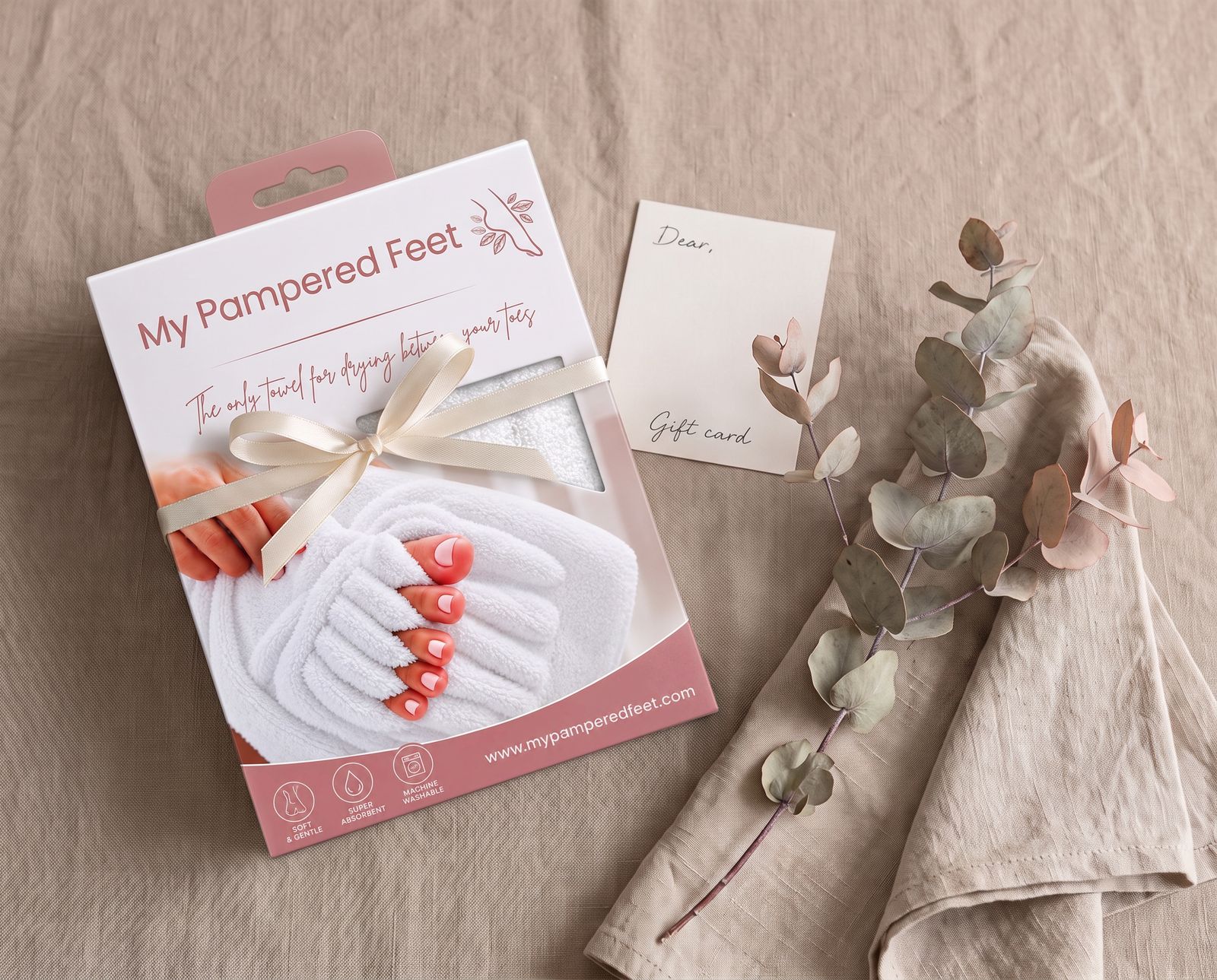
- A dedicated towel for your feet, so foot care stays separate from your face and body towels. A toe-drying towel like the Toe Dry Towel is one option for reaching between the toes.
- A rich foot cream or petroleum jelly for the tops, bottoms and heels.
- Toenail clippers and a nail file (or emery board) to trim straight across and smooth edges.
- A pumice stone or foot file for occasional, gentle smoothing of rough skin.
- A hand mirror for checking the soles of your feet.
- Moisture-wicking socks, enough to change daily (plus extras for the gym).
- Shower sandals or flip-flops for pools, gyms, locker rooms and hotel rooms, as the AAD recommends.
Keep it all in one bag or basket near the shower. When everything is within reach, the routine takes care of itself.
What should you add once a week?
A few extras don't need to happen every day but make a big difference over time:
- Trim your toenails as needed. Cut straight across and file any sharp edges. If you can't see or reach your feet easily, a podiatrist can help.
- Gently smooth rough skin. After a shower, use a pumice stone or foot file lightly on calluses and heels. If you have diabetes, ask your podiatrist first.
- Wash your foot-care items. Launder your foot towel and socks, and clean clippers and files. The AAD advises against sharing towels and shoes, so keep your foot kit to yourself.
- Air out your shoes. Take insoles out when you can and let shoes dry fully between wears.
- Give your feet a longer look. Once a week, spend an extra minute checking between your toes, around your nails and on your heels.
What are the most useful foot hygiene tips for busy days?
- Pair it with your shower. Washing and drying your feet at the same time every day turns your foot hygiene routine into a habit.
- Keep spare socks in your bag. After the gym, a walk or a long day, fresh socks help your feet stay dry.
- Don't forget after swimming. Pool days leave the gaps between your toes wet for a long time, so take a minute to dry them before putting on shoes.
- Wear sandals in shared spaces. Locker rooms and pool decks are where the AAD recommends shower shoes or flip-flops.
- Choose fragrance-free. Gentle products are kinder to skin you wash every day.
If you've noticed your feet still smell even right after a shower, our article on smelly feet after a shower covers the most common reasons.
A gentle way to dry between your toes
Drying between the toes is the step that's easiest to skip, because a regular towel doesn't really reach into those narrow gaps. That's why our founder, Yen, designed the Toe Dry Towel. It has eight soft, absorbent strips, four per foot, one for each space between your toes. After your shower, slide the strips between your toes, let them absorb the moisture, then slide them out. No rubbing needed.
It's machine washable, fits in a gym or travel bag, and gives your feet their own towel, separate from the one you use on your face and body. It's a small upgrade that helps you keep the spaces between your toes dry as part of good everyday foot hygiene. You can see how it works here.
FAQ
How often should I wash my feet?
Every day. The CDC recommends washing your feet daily and drying them completely, including between the toes.
Should I put lotion between my toes?
No. Moisturize the tops and bottoms of your feet instead. CDC foot-care guidance for people with diabetes advises against lotion between the toes because it could lead to infection, and those spaces already tend to stay damp.
What are the most important foot hygiene products?
A gentle cleanser, a towel that can reach between your toes, a good foot cream, nail clippers and a file, moisture-wicking socks and shower sandals for shared spaces. That covers most daily needs.
How often should I change my socks?
At least once a day, according to the CDC, and sooner if they get damp from sweat, exercise or rain.
When should I see a professional about my feet?
If you notice cuts or sores that don't heal, signs of infection, persistent itching or peeling, or thick or discolored nails, talk to your doctor, a dermatologist or a podiatrist. If you have diabetes, check your feet daily and follow your doctor's or podiatrist's advice.
This article is for general information and isn't medical advice. If you have diabetes, a foot condition or signs of infection, talk to your doctor or podiatrist.